Category: Blog

  • Starving for Details in a Novel or Movie

    Starving for Details in a Novel or Movie

    I’m a foodie – I love to cook, bake and eat; I collect cookbooks and leaf through them for fun; I visit epicurious.com more often than most websites.
    As a reader and a writer, I find it fascinating when food is central to the plot. Is food plentiful or not, and why? Do meals reflect the state or region? Do the foods featured give us an idea of the character’s upbringing? Are meals used as a device to bring characters together?

    I just finished reading “The Dinner” by Herman Koch. The entire book takes place at a restaurant over the course of a meal. Two brothers and their wives are the diners. The restaurant is quite posh and this provides tension, as one brother is wealthy and the other is not. I love how the book is segmented by courses, from aperitif to digestif. Of course, this is all background to a truly horrific story involving the couples’ sons but food is a central character in my mind.

    Food plays a major role in every book I write. In FACING FIRE, the 16-year-old protagonist loses her sense of taste and smell because of a traumatic event in childhood. For her, food is about texture and temperature only. Eating is a chore instead of a delight. It affects her health and her relationships.

    In the book I’m writing now, THE LAST SUPPER, the protagonist is a cook in a Louisiana prison in the 1950s. She’s obsessed with creating the perfect last meals for death row inmates. The planning and preparation of these meals helps her avoid the trauma of her father’s death and the execution of his murderer. This same character is also worried that she relies too much on her senses of taste and smell, and that her other senses will suffer if she doesn’t exercise them more.

    When there is no mention of food (or meals or hunger) in a book or movie, I find it quite odd. Food is such an important part of the human experience.

    Do you have a favorite book or movie where food is a leading character or where food is noticeably absent?
  • Sharing the Big News — and a Dose of Reality

    Sharing the Big News — and a Dose of Reality

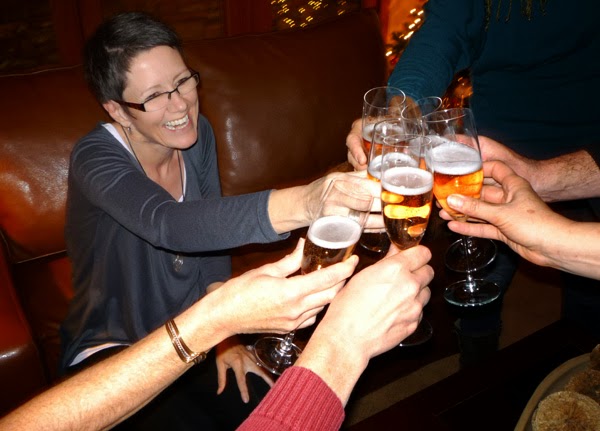
    I recently signed with literary agent JL Stermer of the N.S. Bienstock agency. (Cue the confetti and cheers and champagne!)  Writers understand exactly what this milestone means — that it often takes years of writing, and sometimes writing more than one book, to land an agent. They also understand being represented by an agent is just the beginning.

    It’s a little harder to explain to non-writers. In sharing my news, I’ve stirred up a mess of confusion that I feel obligated to clear up.

    Signing with an agent does not mean I have a book deal.
    In today’s publishing world, authors do not pitch their manuscripts directly to publishing houses. Literary agents serve as a writer’s advocate, selling the story idea, and ultimately negotiating the deal. They serve as a mentor and partner, helping shape a writer’s overall career. One book may have attracted an agent, but the agent/author relationship goes on for years.

    Authors do not pay literary agents.
    Legitimate literary agents do not charge writers for the opportunity to represent them. Agents make their living purely off commission — a percentage of what the author makes on any given deal.

    Literary agents are not obligated to try to sell everything an author writes, especially previously written books.
    The relationship is a partnership but an author trusts that the agent knows what will sell based on a lot of complex and competing factors.  Sometimes those earlier books are just great practice leading up the one that captures an agent’s interest.

    Authors don’t (and shouldn’t) share all the gritty details of the publication process.
    What JL does now is magic…not really, but kind of. She’s the professional. The book is in her hands; the process is in her hands. My job, as a writer, is to be patient and to write the next book.

    Authors don’t get rich overnight, land movie deals and go on nationwide book tours.
    Well, maybe about .0001 percent of authors do and they are ones with blockbuster hits, and their names are usually in a larger font size on the book cover than the actual title of the book. Most writers want to have steady, solid careers in writing and that’s a worthwhile goal. Don’t be sad if your friend or family member is not the next J.K. Rowling.

    Thanks to everyone who’s offered congratulations! And I honestly don’t mind the questions. And for you writers who have recently landed an agent, feel free to use this Q&A with your circle of people.

  • Hello, Universe! It’s me, Mandy

    Hello, Universe! It’s me, Mandy

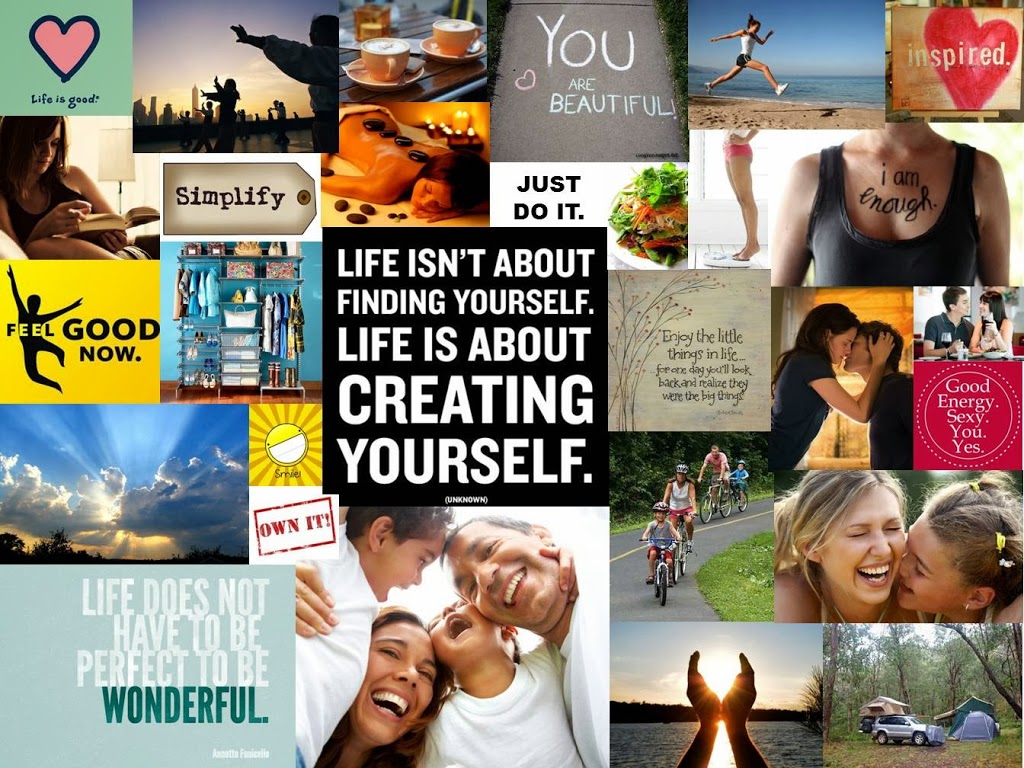
    A work colleague of mine from years ago used to write a wish (dream, goal, intention) on a piece of paper and tuck it away in the back of a drawer. It was a mindful and purposeful way of telling the Universe what she wanted.

    It’s not a new concept. Visualization, meditation, lists, journal entries, vision boards, intention boards all help us clarify what we want from life (in a career, in a partner, in friends).  My sister faithfully creates vision boards each new moon. Now before you react to the woo-woo-ness of that, let’s look at what such boards accomplish.

    Thoughts usually run willy-nilly through our addled brains. In the busyness of daily life, we rarely take the time to think about what we want…what we really want. But when we start looking at pictures (from magazines or catalogues or Pinterest or Google images), we engage a different part of our brain. Pictures help us create a child-like sense of play without the judgments that often crop up in journaling (this happens to me!).

    I thought about how this might work for authors. Even before I start outlining my next book, I’m exploring how to use a vision board to capture the feelings that bubble up when I think about the characters and the time period – the visuals that will lend themselves to words later on.

    I stumbled across an author who uses a Pinterest board in that way. It’s cool that we can go as low-tech or high-tech as we want when setting our goals and intentions.

    Have you done anything like this before?

  • The Gravity of Inaccuracies in Fiction

    The Gravity of Inaccuracies in Fiction

    “Truth is stranger than fiction, but it is because fiction is obliged to stick to possibilities; truth isn’t.” – Mark Twain

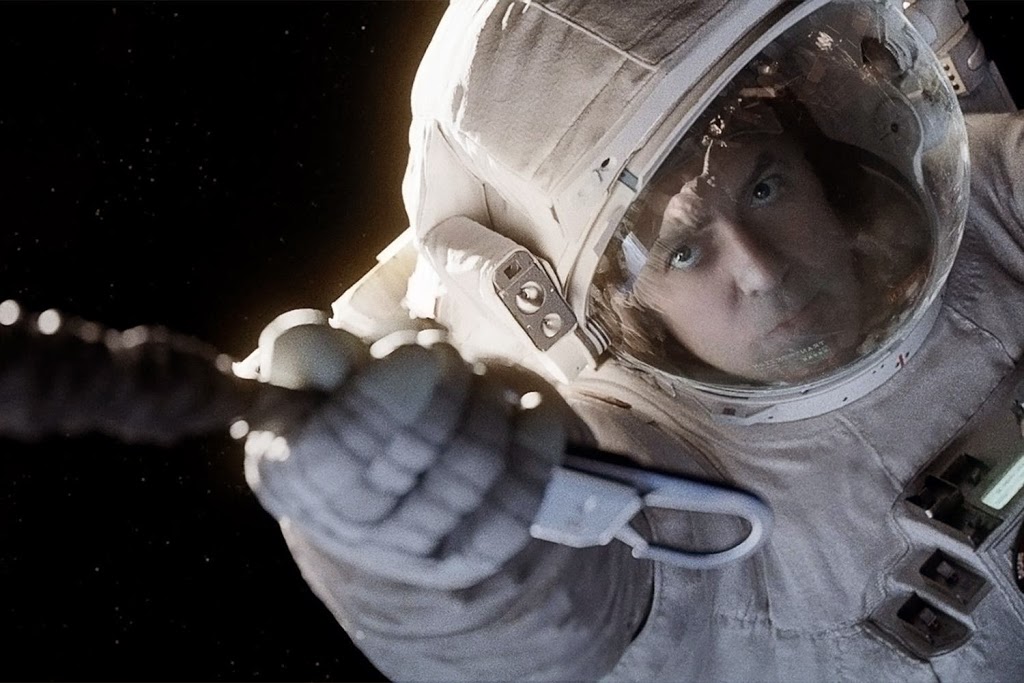
    My husband and I saw the movie “Gravity” recently because it received such great reviews (top critics rated it 100 percent fresh on RottenTomatoes.com).  My husband is an aerospace engineer with a background in orbital mechanics (how things move in space).  After the movie, I asked him if there were any blatant errors in science and he said, “Pretty much everything.” Still, that didn’t completely ruin his movie-going experience because it was an interesting story.  
    We tend to give authors/storytellers some flexibility with fiction because it’s fiction! I think the problem is when inaccuracies pop a reader/viewer out of the story, asking “Can that really happen?”
    I can suspend belief and logic far more easily when reading a book like The Hunger Games. The book is set in a dystopian future so we’re allowed to believe that technology has advanced to include force fields, hovercraft and fiery costumes that don’t harm the wearers. We can imagine a future where 12 kids must fight to the death!
    My writer friend, Micki, is a former police captain who writes crime fiction. She knows what details need to be factual to maintain credibility. And that’s because readers/viewers are knowledgeable and savvy. I’m writing a book set in an infamous and horrific prison in the 1950s. I’m constantly researching what could happen and what’s too far-fetched, even if the story is compelling.
    Do you have any examples of stories/movies that you found completely unbelievable? Did that lessen your enjoyment?
  • Telling the Untold Story

    Telling the Untold Story

    I just saw this Maya Angelou quote on Twitter: “There is no greater agony than bearing an untold story inside you.”

     
    The concept of an untold story is nothing new to writers. It’s the germ not yet developed. It’s the illusive space before that moment of clarity when you finally say, “Yes, this is the story I need to tell.” I’ve known for a while it was time to start writing my next book. But no story gave me that “greater agony” to push me forward. I faced the same fear other writers have had before me: what if I don’t have another book in me?
     
    Then something amazing happened. A dear friend from Mississippi visited and described a story idea she’d love to write one day. One morning a few weeks after our visit, when I was in a gigantic blue funk about my lack of motivation to write, I texted her:
     
    “I need to steal your book idea. I don’t want to write anything else.”
     
    That clarity came out of the blue. And it was so strong that it overrode any fear or guilt I might have about asking such a thing from her.
     
    Because she loves me, she texted back immediately, “You may have it. You are much more likely to write it. I wouldn’t have told you if I didn’t think you could take it.”
     
    Thanks to a generosity I can never repay, the voices in my head (the good kind) are real again. And once again, an untold story is ready to be told. (Katrina, I won’t squander your gift.)
  • Embracing (Not Erasing) Regrets and Mistakes

    Embracing (Not Erasing) Regrets and Mistakes

    As I mentioned in my last post, I enjoy reading young adult fiction. The storylines hold my interest and the characters are often dynamic, flawed and interesting. The books/series I’ve read have cross-over appeal, attracting readers in their 30s, 40s and beyond. (My book club read The Sky is Everywhere by Jandy Nelson; it was one of our favorite books that year.)
    Here’s my admission: as an adult reader of young adult fiction, I sometimes judge the characters for their decisions and feelings. (And mind you, I don’t have children of my own so this isn’t a maternal thing.)
    • “What?! Can’t you see X loves you? Don’t go out with that other guy!”
    • “That’s dangerous! Why wouldn’t you tell X or Y so they could help?!”
    Those protagonists are making decisions that a 14- to 18-year-old would make. They don’t have three decades of ‘learning’ from mistakes to inform those decisions.
    As a writer of young adult fiction, I have to keep those protective (judgmental) feelings in check. Arlie, the protag in my YA suspense novel, makes missteps, puts herself in danger (more than once), doesn’t read the feelings of others’ accurately, feels she’s alone in the world. And that’s as it should be.
    Here’s another admission: I wrote in journals faithfully from middle school into adulthood. I captured on paper some MAJOR errors in judgment. About 15 years ago, I went back and reread journals from my high school years. Adult Mandy was appalled at teen Mandy’s feelings for a guy who turned out to be a pretty BIG mistake. And adult Mandy destroyed two of those journals – as if she could erase feelings and actions that easily.
    See? Adults make major mistakes, too. And I learned from that doozy. Those very real fears, regrets, hopes and dreams make me a better writer of YA fiction. They are to be embraced, not erased.
  • The Trap of Instant Gratification

    The Trap of Instant Gratification

    Just saw this on Twitter: Netflix gives you 15 seconds between episodes to decide whether or not you’re doing anything with your life today.

    For those of you who stream and watch TV series on Netflix, you know how addictive it can be and how easy it is to convince yourself to watch just one more episode.

    I’ve experienced something similar with young adult novel series. I read one book…then have to know what happens to the characters. I download the next book from Kindle (immediately) and read non-stop. Then I’m hooked and ready to read the next book. Then… WHAT DO YOU MEAN THE THIRD BOOK ISN’T OUT YET?!

    The whole YA series phenomena puzzled me at first. Why weren’t writers writing one great book and moving on to new characters and new places?  It took reading a few series to understand that I cared about these well-written, dynamic characters and wanted to tag along for more of their journeys (just as I cared about television characters enough to watch 11 episodes of Downton Abbey one Saturday – but that’s another story).

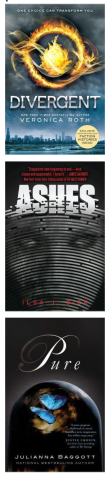
    Katniss (Hunger Games) and Tris (Divergent) and Allie (Night School) and Lyda (Pure) and Alex (Ashes) and Evie (Paranormalcy) and Lena (Beautiful Creatures) and other teen heroines have dominated my Kindle and bookshelf for some time although my reading tastes are usually darker and more literary (George Saunders, Donald Ray Pollock).

    The publishing industry has found a cash cow in successful YA series and the brand loyalty they generate among readers. This is not a bad thing. After all, I’ve enjoyed these series and eagerly await the next installments in some.
     
    But I’m left wondering where the stand-alone YA title fits in?  Will readers of young adult fiction go for well-crafted stories like The Sky is Everywhere (Jandy Nelson) and The Mockingbirds (Daisy Whitney) or have they (we) been trained to expect more? Fodder for another blog.
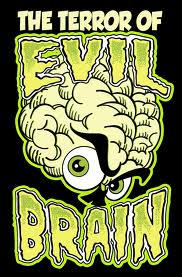
  • Rejection! Attack of the Evil Brain!

    Rejection! Attack of the Evil Brain!

    When I was a kid I thought the summers flew by too quickly. That’s nothing to how I feel as an adult! With business trips, a week being sick, family visiting and numerous writing projects (on top of a busy day job), June disappeared before I could even say hello.

    So, “Hello, July, won’t you stick around a while?”

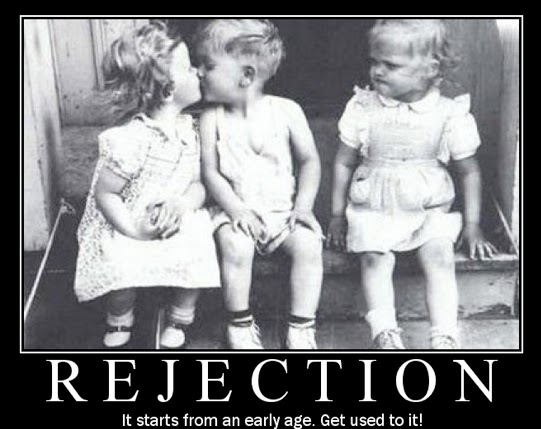
    As a “yet to be published” author, rejection is on my mind quite a bit — especially now that six agents are reading one of my manuscripts and three agents are reading another.  Logic tells me that all nine will NOT email with offers of representation. Rejection is a guarantee, in some form or another.

    With that theme in mind, I want to share an article from Psychology Today that explores 10 ways that rejections affect us psychologically. (Read the article.)

    These three are particularly troubling:
    1. Rejection created surges of anger and aggression.
    2. Rejection sends on a mission to seek and destroy our self-esteem.
    3. Rejection does not respond to reason.

    Whoa. The article convinced me that all types of artists need tender loving care as they put their art in the public domain. No matter how much we tell ourselves not to take rejection personally, our BRAINS do a number on us. Perhaps zombies are altruistic when they run around eating those dastardly brains that try to sabotage our work.

    Let’s remember that the literary agents (readers, friends, etc.) who reject our work aren’t the enemy. Often, it’s just our dumb old brains.

  • Sharing Our Creative Endeavors

    Sharing Our Creative Endeavors

    Yesterday, I was at a park enjoying the sunny day and the live music at Animas Riverfest. I ran into a former work colleague I hadn’t seen in three years or more. I faced the same dilemma I face every time someone asks what I’m “doing” now.

    “Oh, I’m still a marketing and communications specialist for Goodwill Industries International,” I typically say.

    And, then I must decide whether to share that I am also a writer — of fiction. If I do share, then the conversation ALWAYS goes the same way. I kid you not. EVERY SINGLE TIME. First, they ask if I’m published. Second, they ask if I’ve considered self-publishing.

    No, I’m not published. Yes, I’ve considered self-publishing. Most aspiring authors do consider self-pubbing but must carefully weigh 1.) their reasons for self-publishing and 2.) how it fits in their overall writing goals.

    More and more, I find myself not sharing my writing life. I find it tiring to explain how tough an industry it is — even if you self-publish (especially if you self-publish). And I don’t want to feel defensive about something so important to me.

    And did I tell this former colleague I’m a writer? Yes, yes I did. And yes, it played out as I described above. But that’s okay.

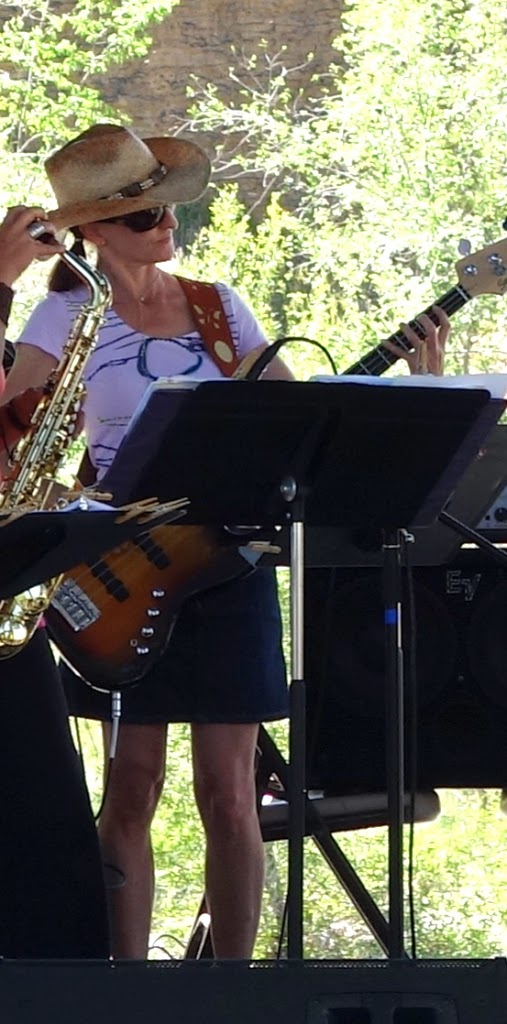
    One of my best friends was up on stage, playing the bass guitar. Like me, she’s a communications professional by day. But she had the guts to say, “I want to create music.” And she went out and did it. Took bass lessons. Plays in bands. Puts herself out there.

    So, like Tracy, I’m putting myself out there. I want to write, no matter the end result. I think I need a cool hat like hers, though.

  • The Upside and Downside of Rejection: One and the Same

    The Upside and Downside of Rejection: One and the Same

    Writer blogs, Twitter, Facebook and other social media have made it easier (and faster) for authors to get their work noticed by other writers, agents and publishing houses. One phenomenon to arise from this instant accessibility is the CONTEST!  Your first 250 words! Your query letter!  Your most suspenseful scene! Your best dialogue!

    There are numerous schools of thought about contests. Let’s look at two. One lauds contests as a means to land an agent. And success stories abound about how a writer found his/her agent in this way. Critics, though, say that contests (when entered too often) deluge the same agents and publishers with your work…that you appear ‘over-eager’ and ‘desperate.’

    Duh. That’s how many writers feel. Excited to get their hard work noticed, desperate to find that one agent who’ll take a chance.

    Regardless of how you feel about contests, the downside and upside are one in the same: you get to experience rejection. Lots of it. Some implied (no requests!) and some stated outright through harsh critiques and feedback.

    It’s all valuable. We learn to trust our guts on what feedback to take to heart and what feedback to leave behind. We choose to develop a thicker skin and move forward, or we let rejection damage our self- worth and shatter dreams.

    Don’t get me wrong — rejection sucks. REALLY sucks. So find other writers with whom to commiserate and stock up on dark chocolate. (I’m set on both counts.)