Category: Blog

  • Attack of the Query Shark!

    No excuses for the long break between posts except that my injured knee and I have been throwing a pity party. The darn joint won’t cooperate and will likely keep me out of the half marathon in Moab, UT on Sunday. Oh well, I got tons of writing done in bed, knee propped up, ice pack in place, listening to tiny violins play in the background.

    I also had some quality Internet time and found two great sites I’d like to share:
    http://jetreidliterary.blogspot.com/
    http://queryshark.blogspot.com

    Both blogs are written by Janet Reid, a literary agent. She’s smart, funny and snarky as hell. The best part is reading her comments on poorly written query letters as well as those that made her want to sign the author.

    Believe me, you’ll be entertained for hours and you’ll start to think you’re one of the greatest writers of all time after reading some of the crap that’s submitted. There’s also lots of great advice – so poke around and read posts like “7 Ways to Drive Your Agent Crazy” and “How to Make Sure Your Query is Instantly Rejected.”

    I know, I know. You may not have finished your book or memoir yet. Write a query letter anyway. It’s great practice – you can always revise it later.

    And before you send your query out into the big, scary world, send it to the Query Shark first. She’ll toughen your skin and possibly help you turn a mediocre query into one that sings.
  • Conjure the Dream

    Conjure the Dream

    I’ve written several times about my intention board — it has my calls to the universe for things I want to manifest in my life. Well, until today, they’ve only been words on Post-It notes; nothing visual.

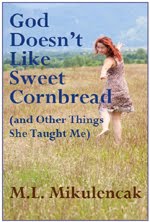
    I recently ran across a powerful exercise for first-time novelists. You’re supposed to seek out an image you think represents your future book cover — and then cut out words and paste up a mock cover to remind you of the dream of publishing that manuscript one day.

    Can I just say HOW MUCH FUN it was to do this? I have some graphic design expertise so I did a pretty involved mock-up (see photo). Then, I did one for the two women in my writers’ group. (We had breakfast today to pump each other for a Friday full of writing.)

    The Artist’s Way also encourages writers to imagine all the juicy details of their dreams. Not just stating “Publish book.” The author suggests writing specifics about what it would mean to achieve that dream. My image is walking in downtown Durango past Maria’s, our independent bookstore, and seeing copies of my book in the window with a sign, “Latest Novel from Local Author Mandy Mikulencak.”

    A former co-worker of mine would write her dreams/wants/desires on pieces of paper, fold them up and hide them in different places in her house. Another would write out her intentions and then burn them, sending the smoke up as her request to the universe.
    Do you take time to conjure your dream, in all its glorious details? I highly recommend it.

  • The POV Smorgasbord

    I’m reading a fascinating book called “Writing in General and the Short Story in Particular” by Rust Hills.

    There’s a lot of great stuff in the book but the chapter on point of view is especially compelling. He goes into the whole list of types (omniscient, first person, third person, scenic, central intelligence) but then goes on to say “It seems to me that the proper attitude for the writer is to leave the systematizing to someone else and just rejoice that there are so many methods.”

    I liked that he outlined some of the limitations of certain POVs but encouraged writers to not be bound by certain rules and conventions. BUT BE SMART ABOUT IT. He describes the work of some authors who intentionally and thoughtfully break POV rules which can be mesmerizing and brilliant. But when beginning writers “break the rules unwittingly, with nothing accomplished by it, it harms the story foolishly.”

    Part of the chapter discusses how authors ‘choose’ which POV to use. He proposes that most times, this decision is unconscious. The technique is second to the story that’s within you aching to be told.

    The characters in my novels have pretty strong first-person voices and I wouldn’t go against their wishes to try out third-person limited or omniscient. But I think it’s worthwhile to practice other POVs. I’m considering writing a short story based on the true story of an elderly woman who was eaten by a bear because she refused warnings not to feed dog food to the bears in her neighborhood. Does her husband tell the story? Does the kid living next door? Or do I serve as a omniscient narrative of this tragic tale?

    So many juicy choices. Hills is right — let’s rejoice that we have so many methods at our disposable.

    Which POV are you most comfortable using? Have you stretched outside that POV yet?

  • Inspiration as Writing Partner

    Some people, when they learn I write fiction, say they’d love to do the same thing but they just don’t have a great imagination.

    Until October 2008, I said the very same thing. I had been a non-fiction writer for more than 20 years; it felt comfortable and it paid the bills. Truthfully, I didn’t think I had a story in me so fiction held no allure.

    When I started the first book almost exactly a year ago, I had NO CHOICE in the matter. I’m not going to get too woo-woo here but the inspiration and many times the words themselves came from somewhere outside of me. Pressed into service, I dutifully took dictation, sometime hours at a time.

    Where the hell did THAT come from, I’d ask in disbelief. My characters would do and say the most extraordinary things, all of their own accord.

    I’m not saying I don’t bring talent to the table. I just know I’m not writing alone and I’m more than okay with that. I don’t call my inspiration a muse. I believe I have a team of guides with me, especially for the writing. (Woo-woo Alert!) Sometimes, I welcome them with burning sage. I definitely say thank-you after a productive day of writing.

    From time to time, I feel an intense pressure and burning sensation at the back of my head during fervent writing sessions – maybe just a friendly nudge from the team.

    I’m fully connected to the characters in my books but I don’t try to force the story on them. Sometimes, they’ll say, “Mandy, I really wouldn’t say that. Try again.” I sigh and rewrite. When I get it right, I feel it in my gut.

    The Artist’s Way says that creativity is an expression of the divine at work. I think it’s connectivity with our universe and all the creative energy we share, past and present.

    Do you feel inspiration from outside yourself? How would you describe it?

  • Wonderful, Frustrating Google

    ARGH! Google fatigue! Information overload!

    I wasted about 2 hours today trying to research how the juvenile courts worked in 1970s Mississippi. I need information on how my novel’s protagonist, Cissy, will make her way through the criminal justice system and into a state mental hospital.

    I’m starting to believe I’d have better luck with a card catalogue system at a university library.

    Don’t get me wrong. I love Google. I use it EVERY SINGLE DAY for something. Looking up phone numbers, checking spelling of corporate names, finding restaurants or hotels, etc.

    I’m just frustrated by the inability of the World Wide Web to serve me what I want on a silver platter, straight to my computer. Did I think research for a novel would be that easy? Well, not really. But I was hoping that Google would narrow down my options.

    I’m wondering how other authors go about research, especially those who write on complicated subjects including law, medicine, espionage.

    Let me know if you’ve faced similar challenges. What subjects have you had to research for your fiction?

  • Natura Naturans

    I first heard the phrase “Natura Naturans” from my nephew who plans to have the words tattooed on his back. It’s a Latin term for “nature naturing,” or more loosely “nature doing what nature does,” and it was top of mind today when I took a two-hour hike on the Lower Hermosa Creek trail near my home. In Durango, we’re experiencing an Indian summer with temperatures near 80 today so it would have been a crime to stay indoors.

    Never before have the oaks been so vibrant in their fall color. My vocabulary was stunted for most of the walk and I rarely managed more than “Wow,” “Look!” and “Oh, those!”

    Once again, a writer at a loss for words. The irony is that nothing inspires me as much as being in the woods. The colors, the scents, the sounds, the textures all call out for someone to catalog them but being so incredibly awe-inspiring, they defy description. They require participation.

    I ran across an out of print book called Nature Writing: The Tradition in English. Writers like Muir, Dillard and Thoreau join many others in writing essays on their natural world.
    I like to imagine them soaking in every detail of their experiences, passing those details through the filter of a writer’s mind, capturing at least the essence of natura naturans for others to experience from the page.

    Today, I breathed in the mix of sun and dust and pine needles on the trail. I heard the lowing of the cattle herd still roaming the hills and the frantic scurrying and chattering of chipmunks and squirrels beneath fallen leaves and brush. I scratched the bark of an elder pine tree to smell the faintest hints of vanilla and burnt caramel. I allowed the wind and the sun to kiss my face, to embrace me, to wash away the worries of the metal and concrete world.

    Has nature been an important part of your writing or creative life? In what way?

  • Real Writers Kill Dogs

    I want to recommend a book for anyone who is serious about fiction writing. It’s called “What If? Writing Exercises for Fiction Writers” (Bernays/Painter).

    One of the authors, Pam Painter, taught the weeklong fiction workshop I attended at Ghost Ranch in August. I’ve been a writer for 30 years and the exercises gave me completely different insight into writing techniques and revitalized all aspects of my writing.

    There are too many brilliant exercises to mention but the one that’s on my mind is called Kill the Dog.

    The authors write: “If you want to write serious fiction, you have to kill the neighbor’s dog. In fiction there is no avoiding the malevolent. In fact, there are very few states of mind or motivation that lie beyond your reach. You should be able to describe a tree, cooking a gourmet meal or slaughtering an animal, for one reason or another, you want to get rid of. Just as an actor assumes the role of a killer and makes him plausible, dispatch the animal convincingly and without flinching.”

    YIKES! The emotional and physical reactions I had to reading that chapter were many: revulsion, horror, fear, anxiety, anger.

    I still haven’t attempted this exercise. But I completely understand the need to stretch beyond the limits of what is comfortable.

    In my novel, God Doesn’t Like Sweet Cornbread, the protagonist has been sexually assaulted by her father for 10 years. It’s not a pretty subject. In fact, some days I’m emotionally spent after spending time in Cissy’s head.

    What do you think of this exercise? Have you written on difficult subjects, even put yourself in the shoes of a killer, villain or sleaze ball?

  • Word Count: The Evil Enemy

    I’m in week 8 of The Artist’s Way. Once again, I’m struck by the messages that were surely written specifically for me.

    Here’s a passage:
    Instead of allowing ourselves a creative journey, we focus on the length of the trip. Focused on process, our creative life retains a sense of adventure. Focused on product, the same creative life can seem foolish or barren. Creativity lies not in the done, but in doing.

    I’ve learned that when you tell someone you’re writing a book, the first question you’re asked is “What’s it about?” The second question is “When will you be finished?”

    The “word count” feature in Microsoft Word is an evil enemy because it keeps your eye on the product (a finished work of at least 80,000 words).

    On my intention board was a Post-It note that read “Finish novel by Dec. 31, 2009.” I’ve replaced it with “Write each day. Show up.”

    How can the story unfold naturally if I give myself a word limit and a deadline? I’m not a journalist any more. I’m a conduit for a story that aches to be told, that’s still being formed, that needs time and space to expand and contract.

    Granted, a map on this journey would do a lot to ease my anxiety. But what if I decided to see that anxiety as anticipation of what’s to unfold?

    In five or 10 years, when I look back at my path, I’m certain it won’t be one that I could’ve predicted.

    What’s the “product” that stands in the way of your creative process?

  • Best Revenge is Massive Success

    I walk along the river trail in Durango two to three times a week. I say hello to everyone I pass but only one out of several will reply or smile. I came home in a snit the other day because this trend really started to bother me. “What’s wrong with me?” I asked my husband.

    The next day, I heard a bit on the radio about a study that revealed a person’s self-esteem is boosted when others smile or say hello to them. Aha! Each time someone failed to respond (smile, nod, speak), I felt rejected!

    Rejection…a walker’s AND a writer’s constant companion.

    My friend, Liz, from Austin, sent me a cool link about famous authors who were rejected repeatedly and often rudely by publishers and agents. I’ve never felt more hopeful about my novels’ prospects!

    Here’s just a sample of the comments. Are you as blown away as I am?

    • Stephen King’s novel, Carrie, was rejected dozens of times. One publisher said: “We are not interested in science fiction which deals with negative utopias. They do not sell.”
    • William Golding’s Lord of the Flies was rejected by 20 publishers. One denounced the future classic with these words: “An absurd and uninteresting fantasy which was rubbish and dull.”
    • Margaret Mitchell’s Gone with the Wind was rejected 38 times.
    • John Grisham’s first novel, A Time to Kill, was rejected by a dozen publishers and 16 agents before breaking into print and launching his best-selling career.
    • After John le Carré submitted his first novel, The Spy Who Came in From the Cold, one of the publishers sent it along to a colleague, with this message: “You’re welcome to le Carré – he hasn’t got any future.”

    As Frank Sinatra once said, “The best revenge is massive success.”

  • Scrabble and the Sh**ty First Draft

    So, I skipped my blog on Thursday and played Scrabble instead. My husband’s sister (Camm) and brother (Garth) are in town and she’s a Scrabble fiend.

    Here’s the irony. I’m a professional writer and editor and I can only come up with words like aim, key, box, top, get. But because we play gals against guys, she’s the reason we win.

    Sometimes I’ll look at my tray of letters and my mind draws a complete blank. I could have a seven-letter word worth an extra 50 points but my brain locks up and I fail to see what’s right there in front of me.

    Occasionally, it’s like that when I work on my novel or other fiction. I’m staring, staring, staring at a paragraph. There’s got to be a better work for X, I think. I stare some more. Surely, it will come to me. BRAIN LOCK!

    I tend to obsess over a sentence or a paragraph instead of getting that sh***y first draft on paper. In fact, I’ve gotten into the nasty habit of starting up my computer, opening the file and reading FROM THE BEGINNING before I start writing. Now, I start each new chapter in a different file so I’m not so tempted to obsess about what’s already been written.

    Self-doubt, perfectionism, ego… all enemies of the sh***ty first draft. Come on! Let’s toughen up! Put those random thoughts down; don’t fret about complete sentences, perfect punctuation, stilted dialogue, purple prose and the occasional POV shift.

    Author Natalie Goldberg writes about the editor/censor being stronger than the writer at times. Maybe a bit of compassion for ourselves could unlock the creative force that’s resisting the constraints we so often put on our writing.